 lidia-susanto
Bayangkan majd pagi di Jakarta: sinyal seluler di lorongkai melambat, aplikasi m banking gagal memuat, danconnections internet di rumah Putar ulang.odgIANapececah broadband andalah — it feels like a bad day. Behind it, however, are structural decisions worth hundreds of trillions of rupiah. This week, three stories broke that touch directly on how technology is built, funded, and owned in Indonesia — and on why the country is still running behind its neighbours in the race to innovate.
Correction: the paragraphs that follow trace those three developments — a corporate split, an acquisition bid, and a sobering national scorecard. Together they paint a picture of an ecosystem that is getting better at moving capital and restructuring assets, but slower at producing genuinely new technology.
Telkom Benahi Betak回首 Manfaatkan Infrastruktur
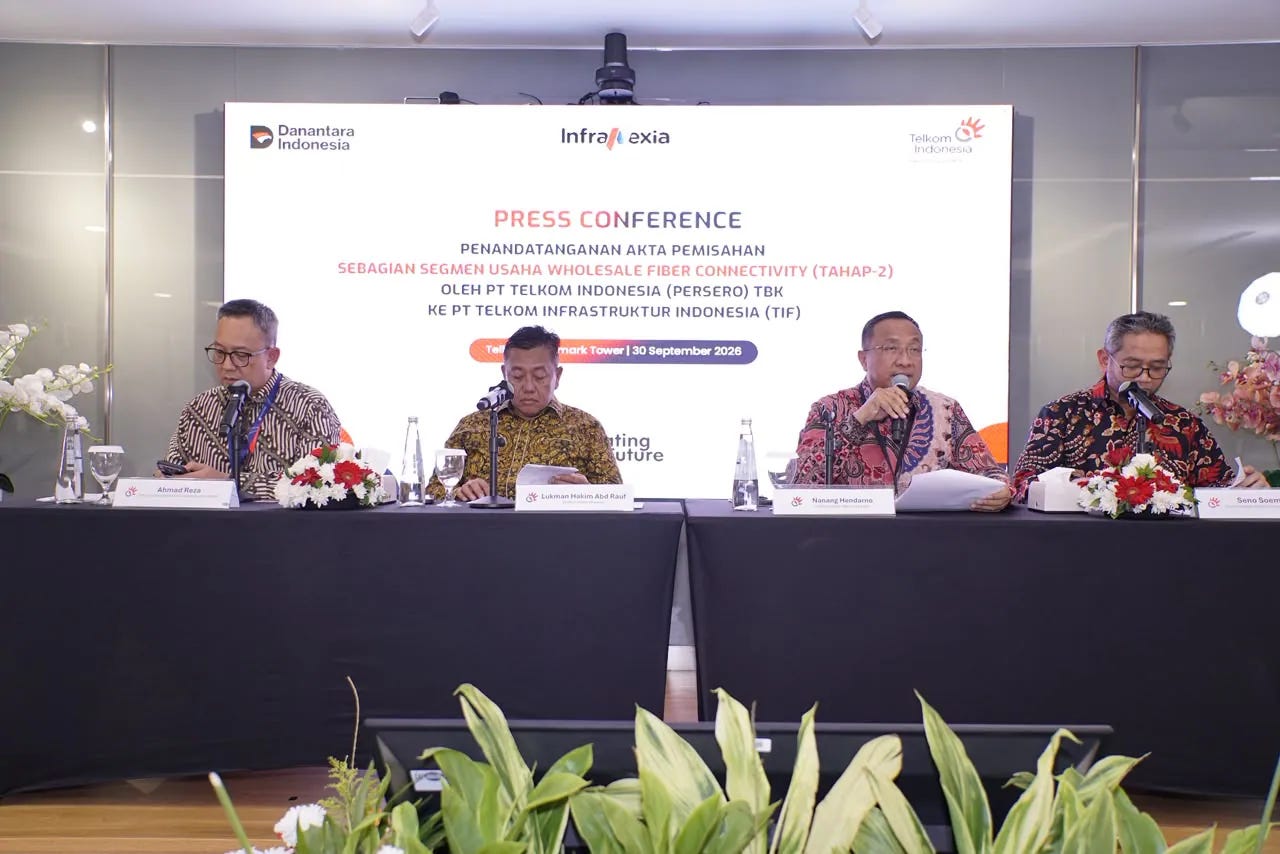
The biggest news concerns TelkomGroup, the state-owned telecom and media group. It has separated its infrastructure division into a new business entity named InfraNexia, covering assets such as fibre-optic backhaul, telecommunications towers, data centres, and related network engineering services.
Why should ordinary users care? Because this is the plumbing of the digital economy. If broadband capacity, tower coverage, and data-centre capacity grow faster and are managed with sharper commercial discipline, everything riding on top gets cheaper and more reliable. Ibarat seperti memisahkan jaringan pipa air dari perusahaanManage overall — instead of treating it as a side activity, it becomes a business in its own right, with its own customers, its own profitability targets, and its own pressure to be efficient.
There is a second, more symbolic layer. For years, analysts have complained that Indonesia's state-owned enterprises dominate infrastructure but create relatively little breakthrough technology. Splitting infrastructure off does not, by itself, solve that. It separates the business that generates predictable cash flow from the businesses that require venture-style risk-taking.
Dalam pola ini, perusahaan induk melepas aset yang matang danaru ke Movies — sementara eksperimen yang lebih berisiko harus mencari pendana sendiri.望远, itu ibarat memindahkan halaman keb housekeeping danvascular кухни: lebih rapi, tapi belum tentu lebih inventive.
Durianpay Masuk Radar SBI
The second story involvesSBI, which is reported to be looking at Durianpay, a payments startup operating in the QR-based transaction space. In Indonesia, QR-based payments are no longer a novelty — they are everyday infrastructure. Tap or scan at a warung coffee, a bensin station, or a parking exit, and small merchants settle transactions in seconds without needing a card machine.
That growth explains the strategic value. Payments startups attract corporate buyers for three reasons: the merchant network, the transaction data, and the licence-plus-technology bundle. For SBI, acquiring such a platform would be a shortcut to tens of millions of merchants who are already used to digital transactions but rarely touched by the formal banking system.
For consumers, the promise is familiar: cheaper, faster, simpler payments, including for users who still prefer cash on delivery. The risk is equally familiar — consolidation can reduce competition, raise merchant fees in the long run, and make payments data flow into fewer hands.
Kesenjangan Inovasi Masih Terukur Jauh
The third thread is less dramatic but arguably the most important. Indonesia's research and development spending still sits at roughly0,3 persen dari produit domestic bruto — a figure that has barely moved over the past decade. For comparison, Singapore has long been measured in the two-percent range, while even Malaysia and Thailand have traditionally outpaced Indonesia on this indicator.
Why does that gap matter? R&D spending is not an abstract prestige metric. It is the raw material for patents, deep tech, semiconductor design, biotechnology, and advanced materials — the categories where disruption is actually born. Startups cannot compensate for a thin national research base forever; they are built on top of laboratories, universities, and industrial ecosystems that must exist upstream.
There is a second structural issue: fragmentation. Hundreds of local governments run their own digital programmes, procurement rules differ sharply across regions, and regulatory changes can arrive faster than companies can adjust. Ibarat seperti沉着 the highway — lots of cars, but every driver making a different lane decision. The result is high compliance cost and low scale-up potential.
Tiga Sinyal untuk Pembaca
Put together, the three stories point in the same direction. First, capital is flowing towards infrastructure and financial rails rather than frontier science — which is rational in the short term, but does not by itself raise the country's innovation ceiling. Second, consolidation is accelerating, and consolidation tends to reward efficiency over experimentation. Third, the policy burden still sits mainly on startups, while the payoff — patents, high-value exports, deep tech — takes years to appear.
For everyday users, the near-term benefit of this week's moves is real but modest: better connectivity capacity, and possibly smoother payments. The strategic question is whether Indonesia eventually invests as seriously in research as it does in infrastructure assets. Until the R&D ratio moves, the country will keep importing the most disruptive technology from abroad — and keep buying it in dollars instead of exporting it.
That is the number worth watching: not how many startups launch, but how much the country actually spends on inventing.











Comments (0)