 lidia-susanto
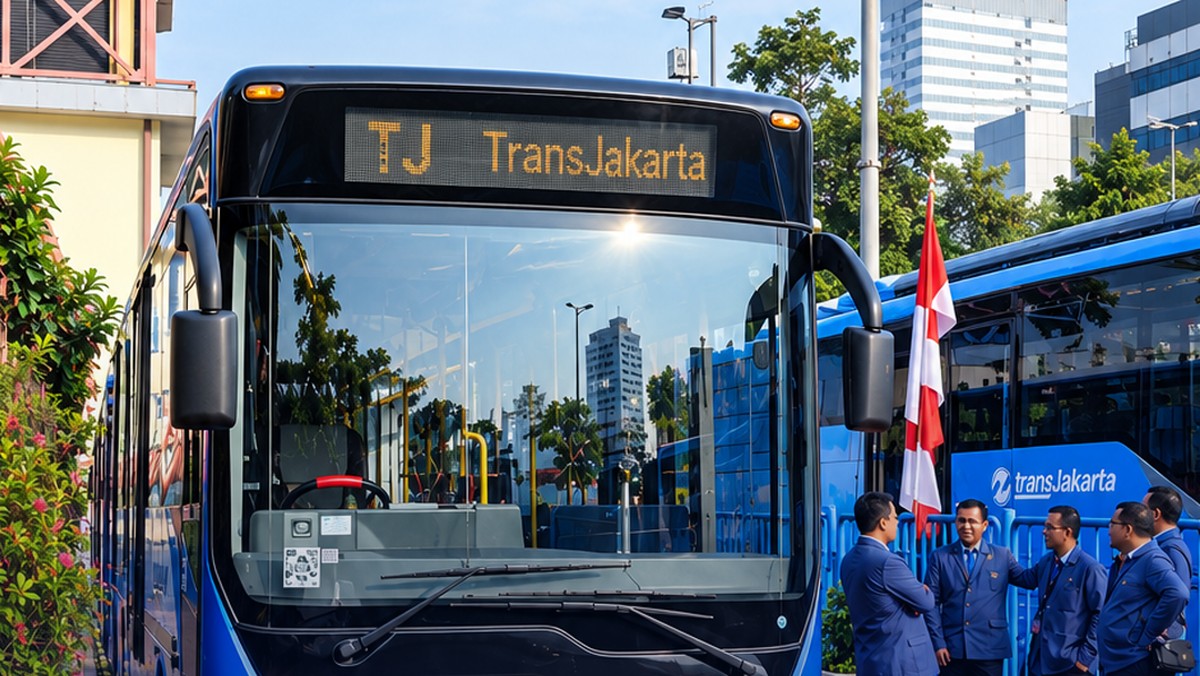
Ongkos perjalanandivide among the daily breadwinners of Jakarta:-wage earners who leave home before dawn, students squeeze into buses from the suburbs, and workers who return home after dark. For them, a bus fare difference of a few thousand rupiah is not trivial. It can mean one fewer fried snack per ride, or a month of accumulated costs multiplied by twenty trips. That's why the news that TransJakarta tariffs are set to rise has moved from a note in council rooms into living-room conversations within days.
To understand why it matters, imagine a toll on a public bridge. The authority that maintains the bridge sets the tariff; the bridge benefits thousands of people, but the burden of construction and repair falls on the government budget. Public buses are no different: the fare is only one of two sources of money that keep the system moving. If the fare rises, the gap the government must cover shrinks. If the fare does not rise, then either the subsidy grows, or the service degrades. This is the classic equation every city faces when running a mass transit system.
First, Who Exactly Is TransJakarta?
TransJakarta is the bus rapid transit (layanan bus cepat berjalur khusus) operator serving the capital region, while a number of routes extend to surrounding cities such as Bekasi and Depok. The service runs on several main corridors, supported by feeder routes that pick passengers up from neighborhoods to the main line. Payments are made using an integrated electronic card, and the system is connected to other rail-based services operated by state-owned railway companies.
The riders are extremely diverse: office commuters, housewives, market traders, students at public and private schools, elderly residents, and even people who ride simply to escape congestion. That diversity is precisely why a fare policy cannot be treated as a purely financial decision. It is a social decision, and that is where the legislature enters the picture.
What Is Changing, and By How Much?
Several figures have circulated in public discussion. Historically, the flat-fare inter-city buses in the Greater Jakarta area have been charged around Rp5.000 per trip, while feeder buses have been priced lower, roughly Rp3.500. The adjustment now under discussion points to a higher figure, around Rp8.000 for the inter-city buses, with the possibility of the feeder fares following suit at a later stage.
It is important to note that these numbers are still in the proposal stage. Until a mayoral regulation is issued, the new tariffs are not final, and the figures may still shift.
| Service type | Current fare | Direction of adjustment | Note |
| Regular buses, Greater Jakarta corridors | Rupiah 5,000 | Potentially to around Rp8,000 | Largest group of riders |
| Feeder buses | Rupiah 3,500 | May follow later | Serves suburbs |
| Subsidized categories (students, seniors, low-income residents) | Below the normal fare | Maintained | Adjusted to income verification |
Why Must It Rise? The Arithmetic of Operating Costs
The core reason lies in operating costs, which have climbed steadily. Fuel is the most obvious item, but it is far from the only one. Vehicle maintenance costs rise as the fleet ages; spare parts and workshop labor become more expensive. Tyres, lubricants, cleaning services, driver salaries, and insurance all add up. Each year the fleet gets older, efficiency drops, and the cost per passenger-kilometer goes up.
Passenger revenue covers only part of these needs. The rest is filled from the regional budget, known as APBD (Anggaran Pendapatan dan Belanja Daerah, or regional revenue and expenditure budget). When regional revenue weakens while subsidies for fuel and energy grow, the pressure lands on the fare side of the equation. Transport observers often use a simple analogy: it is like a household whose water bill rises while the pump breaks down. Raising the tariff is one exit door; raising the quality of service is the other. Ideally, both happen together.
The Legislators' Promise: Protection Mechanisms That Must Be Real
The legislators in question are <:sep>DPRD, members of the Regional House of Representatives. Their function in this matter is to oversee and approve the regional budget, including the subsidy allocation for public transportation, and to push for protection measures for low-income passengers.
The promise delivered to the public generally contains several elements. First, subsidized fares remain available for students, elderly passengers, and low-income residents, so that a fare adjustment does not automatically become a burden on them. Second, verification of income will be tightened so that the subsidized quota truly reaches those who need it, instead of being enjoyed more widely than intended. Third, the adjustment will be accompanied by an evaluation period: if service quality and rider comfort do not improve, there is room to revisit the policy.
Raising the fare is permissible, provided the additional funds are transparently directed toward better service for passengers. If the fare goes up but the buses stay crowded and the schedules remain long, the public will understandably feel they have paid more for the same experience.
This is a view expressed by transportation policy observers, and it summarizes the central risk of a fare adjustment: credibility. Fare increases are tolerated when people can see where the money goes.
What Should Passengers Watch For Now?
Several things are worth monitoring. The first is the final figure written into the mayoral regulation, not the number circulating in the media. The second is how broad the subsidized categories become, and whether the verification system is easy for ordinary passengers to access. The third is service quality: bus frequency, waiting time, air conditioning performance, and the availability of direct routes from residential areas.
There is also a larger picture. Fare adjustments should ideally be paired with improvements in the network, such as more direct routes, better connections to commuter rail, and smoother integration with feeder buses. Only then does a fare increase translate into a real increase in travel efficiency, rather than simply a bigger bill.
For now, the safest reading is this: a fare adjustment is planned, the legislature has committed to protecting vulnerable passengers, and the decisive test will be whether those commitments appear in the details of the regulation and in the everyday experience of riding. Jakarta’s commuters will not judge the policy by the press conference, but by the length of the queue at the stop and the temperature inside the bus at three in the afternoon.









Comments (0)