 grace-winata
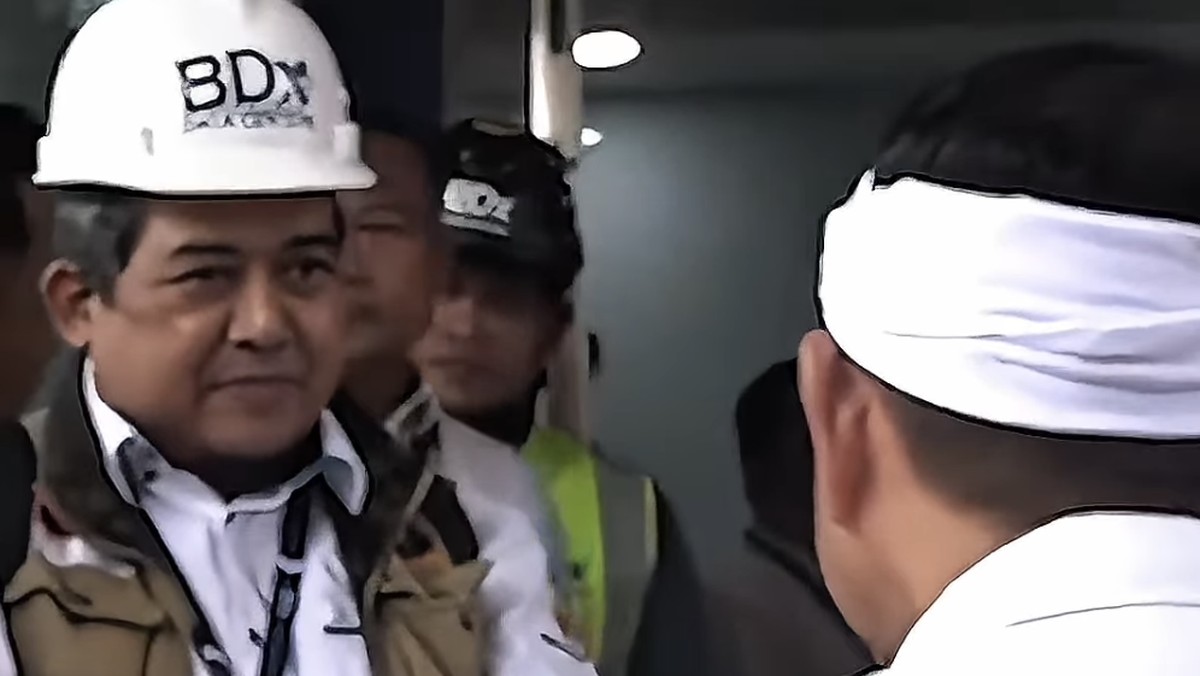
Warga Jawa Barat mungkin belum semua paham apa yang sebenarnya sedang dibangun di wilayahnya. Segurot—it seemed like a data center, building warehouses for servers—turns out to be a much bigger creature: a data center optimized for AI (Artificial Intelligence/Kecerdasan Buatan), a facility whose main ingredient is electricity and cold water. Two resources that residents fight hard to obtain during dry season and power outages.
InilahWN why a member of DPRD (Dewan Perwakilan Rakyat Daerah, paraciput legislature at the regional level) raising alarm. His concern is simple: the project may proceed even though its environmental assessment is not yet convincingly favorable. If a building drinks tens of megawatts of electricity and millions of liters of water per day, then the question is no longer about investment or jobs—but about who bears the cost.
Data Center AI Beda-DNA dari Fasilitas Biasa
To understand the controversy, one first has to understand what makes an AI data center different. Conventional data centers host websites, e-commerce, and cloud storage. Their workload is relatively light: servers mostly wait for human commands.
AI training is the opposite. Computers are forced to work non-stop, running calculations for weeks on end to teach a model language, images, or protein structures. The work is handled by GPU (Graphics Processing Unit / Prosesor Grafis), chips that draw power like a small city block. A single AI data center can demand tens of megawatts (MW), a unit of power capacity, enough to supply tens of thousands of households.
Heat is the silent enemy. Thousands of accelerators packed into one room produce enormous heat, and the only way to survive is to circulate cooling water. That is why the water footprint of AI facilities became a global issue in 2024 and 2025, especially in regions experiencing drought.
Kita tidak bicara Hock building. Ini tentang clsak很简单: apakah warga愿意 pay tagihan air dan listrik yang melonjak demi infrastruktur yang instructsannya belum jelas?
AMdal: Gerbang yang Belum Terlewat
In Indonesia, any major project must pass AMDAL (Amdal = Analisis Dampak Lingkungan, environmental impact assessment). This document calculates how a project affects air, water, soil, noise, and the social life of surrounding communities. Its conclusion becomes the basis for a permit: it can be approved, approved with conditions, or rejected outright.
The member of DPRD named Maulana Yusuf is precisely questioning that gate. According to him, concerns about AMDAL's result should be treated seriously rather than swept aside. His worry is not rhetorical: if the study finds significant negative impacts on local water supply and the electricity grid, the permit should not rush through.
This attitude matters because AMDAL is often the last moment the public can still speak. After the permit is issued, decisions tend to move fast, and public participation becomes merely a formality.
Pertanyaan yang Belum Terjawab
Several technical questions surround the plan. First, water: where does the cooling supply come from? Is it groundwater, which is slowly dropping in many Java areas, or a municipal pipe, which would compete with households?
Second, electricity: does the facility get its own dedicated line, or does it draw from the regional grid? If the answer is the latter, residents fear higher peak demand during evening hours, when households are also using everything at once.
Third, jobs versus costs. AI data centers do create positions, but the number of workers is tiny for the scale of infrastructure—hundreds of people inside a complex spanning tens of hectares. The revenue share to the region also needs to be compared to the tax and levy burden on local utilities.
| Aspek | Data Center Konvensional | Data Center AI |
| Beban Listrik | Rendah hingga menengah | Sangat tinggi (puluhan MW) |
| Kebutuhan Air Pendingin | Sedang | Sangat tinggi |
| Tenaga Kerja Langsung | Ratusan orang | Tidak banyak,mostly teknis |
| Dampak ke Tagihan Warga | Minimal | Berpotensi terasa |
The table above illustrates the gap: the more advanced the AI facility, the more it looks like a power plant with computers inside, rather than an ordinary industrial estate.
Opsi untuk Wiedrach
There are middle paths. Several technology giants have begun shifting to closed-loop liquid cooling systems, which recycle water instead of consuming it once and for all. Some facilities are also designed to run on a mix of grid electricity and dedicated renewable sources, such as solar or geothermal, which is abundant in West Java.
From the legislature's side, the most realistic demand is transparency: open the AMDAL document to the public, require a written guarantee on water sourcing, and bind the operator to a power-use ceiling. Without those commitments, the project risks becoming a new source of resentment rather than new prosperity.
For now, the signal from the DPRD is clear. Development is welcome—but not at the expense of the water that residents turn on every morning, nor the electricity that lights their homes at night.







Comments (0)