 olivia-hartono
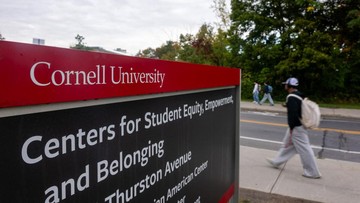
Importance of this story is not only about one case. When an allegation of sexual violence involving one of America's most prestigious universities makes its way back into a prosecutor's office, what happens next becomes a test case for how legal institutions, campus administrations, and law enforcement deal with complaints that are often years old. On the latest development, prosecutors in New York State have reopened their investigation into allegations of rape connected to Cornell University after the complainant's lawyers filed a new lawsuit. The reopening signals that a case once considered dormant can return, and it revives questions about evidence, deadlines, and institutional accountability.
Cornell University, founded in 1865 and based in Ithaca, New York, is a member of the Ivy League and one of the country's oldest land-grant universities, with a student population of roughly 30,000. Because the institution sits inside New York State, criminal jurisdiction over any alleged offense on its campus falls to local prosecutors rather than to a federal agency. That distinction matters, because the case must move through two very different legal machines at once: a criminal investigation run by a prosecutor, and a civil lawsuit filed by private lawyers on behalf of the survivor.
Why the Case Was Reopened
Prosecutors do not normally revive closed files without a legal trigger. In practice, a fresh civil filing by the survivor's legal team can do exactly that. A civil complaint, filed in a state or federal court, is not proof of guilt, but it is an official, time-stamped document containing allegations, dates, and potential witnesses. Handed to prosecutors, it becomes a checklist: who has not been interviewed yet, whether physical or digital evidence survives, and whether testimony remains consistent.
The other common trigger is the statute of limitations, which means the legally defined window during which criminal charges may still be brought. New York's rules have been repeatedly adjusted by legislation, including laws that pause or extend the counting period for certain sexual offenses involving minors or victims who were unable to come forward earlier. A reopening can therefore be read as a race against a clock rather than a verdict on anyone's conduct.
In American legal practice, reopening a file is not an accusation. It is a statement that the evidentiary standard has not yet been evaluated, and that the timeline itself has become the central question.
Two Legal Machines Running in Parallel
The survivor now has two tracks available, and they are frequently misunderstood. A criminal case carries the heaviest burden: the state must prove guilt beyond a reasonable doubt, a threshold that sits above 99 percent confidence in practice. A civil case operates on a lower standard, requiring only that a claim be more likely than not to be true. So it is entirely possible, and not contradictory, for a civil complaint to proceed while criminal charges remain under investigation.
| Aspek | Gugatan Perdata (Sipil) | Penyidikan Pidana |
|---|---|---|
| Pelipu | Korban atau менеh melalui pengacara | Negara, diwakili jaksa daerah (District Attorney/DA) |
| Standar bukti | Lebih mungkin benar daripada salah | Di luar setiap keraguan yang wajar |
| Sasaran | Kompresi, ganti kerugian, pernyataan resmi | Vonis pidana atas SZ,余Classified |
| Peran korban | MenjadiHDLHDDentlich pihak penuntut | Menjadi saksi, bukan pihak yang demanded |
| Batas waktu | Umumnya lebih longgar | Diikat statutes of limitations |
Paradoxically, this dual-track design is often what makes new litigation possible. Civil attorneys can interview witnesses, subpoena documents, and depose the university without waiting on a criminal process, and everything they uncover may later refresh a prosecutor's view of a stale case.
The Campus Ecosystem: Rules, Data, and Algorithms
Universities in the United States operate under a dense regulatory layer. Title IX is the federal statute, enacted in 1972, that prohibits sex discrimination in federally funded education programs, which includes prohibiting sexual harassment and the mishandling of sexual violence complaints. The Clery Act of 1990 requires institutions to publish annual campus security statistics, including reports of rape, robbery, and aggravated assault occurring on or near campus property.
That reporting layer has grown into a genuine technology ecosystem. Modern compliance offices use case-management platforms with encrypted evidence storage, role-based access for investigators, audit trails for every document viewed, and automated deadline alerts tied to statutes of limitations. Surveillance cameras, mobile reporting apps, and digital forensic imaging of phones or laptops now routinely appear in case files, and the algorithm behind retention policies determines whether video survives long enough to be examined. This is where efficiency becomes decisive: in a case that may be years old, the difference between preserving and overwriting a single frame of footage can be the difference between an investigation that proceeds and one that stalls.
What It Means for Accountability
For observers, the reopening raises structural questions. Legal frameworks such as Title IX require institutions to respond within fixed internal timelines, which can expire long before a criminal case is resolved. Critics argue that the resulting culture pushes universities toward preliminary findings made under intense scrutiny rather than judicial standards. Defense counsel, meanwhile, routinely argue that years of accumulation and repeated scrutiny can exhaust the memories of witnesses, making reliable conviction harder as time passes.
It is also worth remembering that allegations and convictions are not synonyms. An investigation begins with a presumption of innocence, and no individual should be treated as guilty on the basis of a filing alone. But the reopening itself matters: it means that alleged victims still see a functioning channel for justice, and that the question of what really happened in Ithaca has not been archived away.












Comments (0)