 fahmi-reza
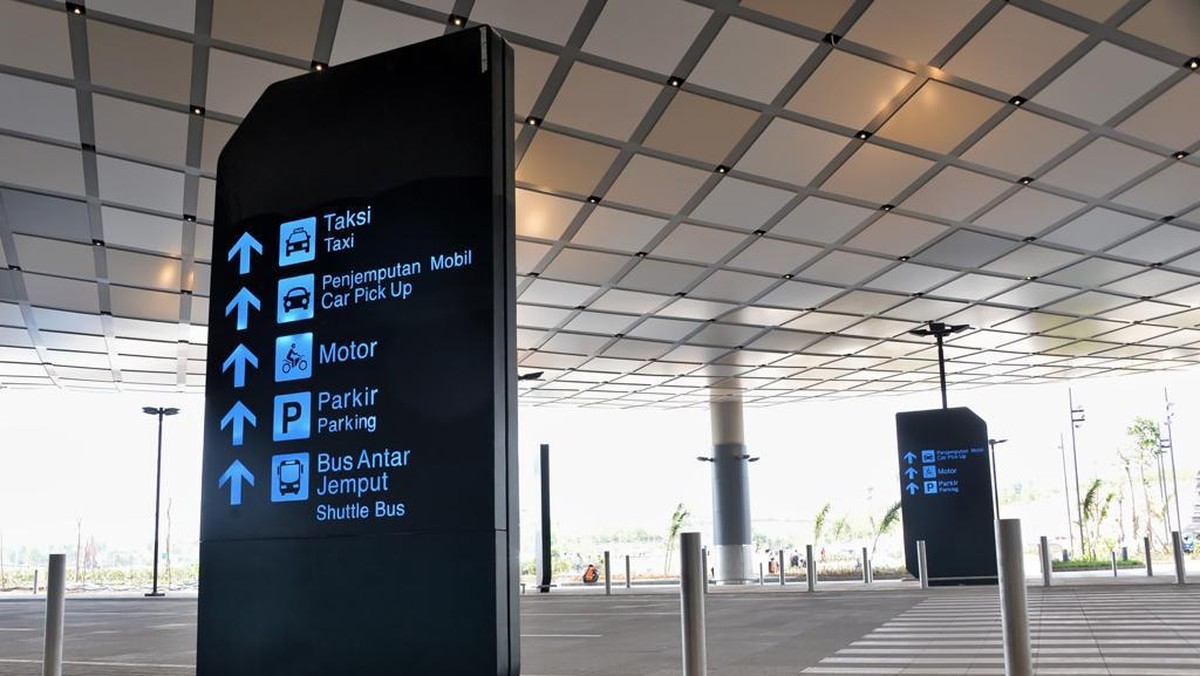
andover startling news in the aviation world rarely arrives with a ribbon cutting. More often, it arrives as a document: a certificate of operation, a handover meeting, a change in the name printed on the signboard at the terminal entrance. That is what happened at Dhoho Airport in Kediri, East Java, where management transition from the InJourney Airports group to PT Salad Hut Indonesia (SDhI) has officially been declared complete. Starting 1 October 2026, the airport serving the Kediri and surrounding regencies will be operated by SDhI.
Why does this matter to ordinary passengers? Because a change of operator is rarely just an administrative matter. Behind the handover paperwork sits a bigger question about how a small regional airport competes for routes, manages costs, and keeps flights affordable for a city that never had a major hub of its own. Dhoho Airport, whose runway was built in a hilly area north of the city, once connected Kediri with Jakarta, Bandung, Surabaya, and even Bali. Whether those connections survive — or return — depends heavily on how the new operator optimizes the asset.
From State-Owned Giant to Regional Operator
To understand the shift, it helps to recall the structure. For years, Dhoho Airport was managed by Angkasa Pura II, one of the state-owned airport holding companies in Indonesia. In 2024, that group rebranded itself as InJourney Airports, reflecting a broader consolidation of airport management under the InJourney ecosystem, which also covers toll roads and other transport infrastructure.
Angkasa Pura (AP) is an abbreviation for a state-owned enterprise, and its traditional strength is scale: standardized terminals, integrated Airport Operational Database (AODB — a system that records every aircraft movement, passenger, and bag), and centralized human resources. The weakness of scale at a small airport is inefficiency. Fixed costs such as security, air traffic coordination, and terminal upkeep do not shrink when the number of daily flights falls to single digits. A regional operator with a leaner cost structure, on the other hand, can sometimes keep a route alive longer.
SDhI — the abbreviation for PT Salad Hut Indonesia, a Perseroan Terbatas or limited liability company — belongs to the Salad Hut group, which in recent years has progressively taken over a number of smaller and medium-sized airports from larger operators. The pattern is consistent: the state keeps the strategic and loss-making assets, while experienced managers run the daily operations with tighter budgets and more flexible commercial deals.
Digitalization as the Differentiator
The most visible battleground in airport management today is technology. A terminal that still relies on manual check-in counters, paper boarding passes, and manual flight information displays will struggle to attract low-cost carriers (LCC — maskapaiSfn低成本, which are airlines built around low operating costs and the absence of extras). Low-cost airlines demand fast turnaround times, because the value of a 30-minute turnaround is far greater to them than to a full-service carrier.
Under the new management, the direction being discussed is a gradual upgrade: self-service check-in kiosks, e-gates that read digital IDs, real-time flight information screens connected directly to airline systems, and possibly biometric boarding. For passengers, this means shorter queues. For the airport, it means fewer staff needed per flight — which is exactly where the efficiency gains come from.
| Aspek | Pengelola Lama | Pengelola Baru |
|---|---|---|
| Skala | Besar, terpusat, seragam | Regional, fleksibel, ramping cost |
| Sistem | AODB terpadu | AODB, dioptimalkan per_what |
| Prioritas | Standarisasi layanan | Efisiensi dan digitalisasi |
What the Numbers Look Like
Dhoho Airport is a small facility by national standards: a runway of roughly 2,400 meters, a compact passenger terminal, and limited parking capacity. Its annual passenger numbers in recent years have fluctuated sharply, a pattern typical of regional airports that depend on subsidized routes. Flights to Jakarta, once the backbone of its traffic, have been suspended and restarted depending on demand, fuel prices, and airline strategy.
That volatility is precisely what the new operator is betting on: if the cost of operating each flight can be lowered — through digital systems, shared security coordination, and more aggressive route marketing — a small airport can become viable again. Energy efficiency is another angle, with solar panel installations and LED terminal lighting among the interventions commonly pushed in regional airports to cut electricity bills, which are the second-largest operating expense after personnel.
"Aivables change of operator at a small airport is a stress test for efficiency. If the digital side — check-in, boarding, flight information — is not upgraded, the new manager will simply inherit the old costs. The opportunity lies in making technology, not the terminal building, the main investment," said a transportation and aviation expert.
For the people of Kediri, the outcome will be measured in one simple way: whether the number of destinations from Dhoho Airport goes up or down in the years after 1 October 2026. Disruption is a fact of life in the aviation industry, but a well-run regional airport can keep a region connected without requiring passengers to travel hours by road to reach a major hub. The new management's first twelve months will tell whether the transition produces a real disruption in the good sense — breaking old patterns of inefficiency — or merely changes the name on the signboard.













Comments (0)