 lidia-susanto
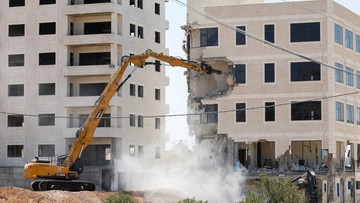
seldom realized by ordinary consumers: nobody checks where the concrete came from, which vendor supplied the servers of a cloud service, or which bank financed a particular construction project. Most of us interact with global supply chains only through a price tag, a delivery notification, or a terms-and-conditions page clicked in a hurry. Precisatelah why the release of a list of 214 companies from 11 countries linked to Israeli settlements in the West Bank carries weight far beyond diplomatic circles: it makes the invisible supply chain suddenly, and rather uncomfortably, visible.
The list was issued by the Office of the United Nations High Commissioner for Human Rights, better known by its English acronym OHCHR, or in Indonesian Kantor Komisioner Tinggi PBB untuk Hak Asasi Manusia. The office, headquartered in Geneva, is the human rights arm of the United Nations, tasked with documenting, monitoring, and reporting conditions on the ground wherever serious violations are alleged. When such an office publishes names, it is not a court verdict and not a blacklist, but it does create reputational consequences that travel quickly through investor circles, procurement departments, and newsrooms.
Apa Isi Daftar dan Bagaimana Bacanya
The document compiles hundreds of corporate entities, naming not only large multinational corporations but also mid-sized contractors, banks, logistics operators, hospitality groups, and technology or service providers. According to the publication, the 214 entities span11 countries, meaning the alleged chain of involvement crosses borders rather than remaining an Israeli-only story. That detail matters: money, engineering expertise, equipment, and software all move fluidly across borders, so any serious accountability effort has to follow the same paths.
Reading the list correctly is essential. The framing used in human rights reporting is generally cautious: a company being named indicates a documented connection, such as supplying goods or services, providing financing, undertaking construction, or delivering logistics and technical support in settlement areas. It is not, by itself, proof that a firm committed a crime. The presumption of innocence still applies, and companies listed may dispute or clarify the basis on which they appear. Yet the reputational sting of appearing on a United Nations list is often immediate, and many firms respond publicly within days rather than weeks.
The background is equally important. Most United Nations bodies, together with the International Court of Justice, have stated that the Israeli settlements in the occupied West Bank violate international law, a position rooted in the Fourth Geneva Convention. The dispute over settlements has therefore moved from being a purely legal debate to being a business ethics question, and that is exactly where technology and corporate governance enter the picture.
Angka yang Perlu Diletakkan dalam Konteks
Two figures dominate the report: 214 companies and 11 countries. Those numbers are large enough to be significant but far too small to represent the entire global market. In other words, the list is best understood as a documented subset, the tip of an iceberg that researchers, journalists, and non-governmental organizations can still enlarge. Investors often treat such compilations as a starting point for deeper research rather than as a finished investigation.
For technology readers, the interesting part is not the count itself but the mechanism behind it. Modern supply chains leave unusually rich digital traces: procurement records, corporate registries, satellite imagery, port manifests, and internal corporate disclosures. Investigators can cross-reference a construction firm in one country with a bank account in another and a software vendor in a third. Data analytics, sometimes combined with machine learning (a technique where a computer system learns patterns from data to assist in classification or prediction), speeds up this kind of cross-border tracing dramatically compared with manual file review.
Technology as the Invisible Link
It is easy to assume technology companies are peripheral to a story about land and housing. In practice, the opposite is often true. Connectivity infrastructure, mapping and surveying tools, enterprise software, security systems, payment services, and maintenance contracts can all underpin operations in settlement areas. Simply put, it is like tracing one small bolt inside an enormous machine: pull that bolt and you discover which factory shipped it, which port stored it, and which company certified it. Technology rarely decides anything on its own, but it is frequently the layer that keeps everything else running.
This is also why the concept known as ESG (Environmental, Social, and Governance, or environmental, social, and governance aspects of corporate performance) has become the industry vocabulary for the debate. Investors who once screened companies only on profit now routinely ask about human rights exposure, conflict minerals, forced labor, and supply chain transparency. A name appearing on a United Nations list can trigger a fresh internal review, a customer backlash, or a shareholder lawsuit, depending on the jurisdiction.
Dampak bagiPara升温an
The table below summarises who feels the impact and how.
| Para职场 | Bentuk Dampak |
|---|---|
| Konsumen | Produsen dan merek dapat dituntut menjelaskan asal-usul material dan komponennya |
| Investor | Penilaian risiko dan CAPITAL重新可能在 undertaken ulang sehingga memengaruhi harga saham |
| Regulator | Pengaturan kewajiban tinjauan tuntas rantai pasok menjadi alasan Strength untuk bertindak |
| Perusahaan | Tinjauan internal, perubahan kebijakan Wednesday sourcing, hingga名校 gugatan hukum |
“Begitu nama sebuah perusahaan masuk daftar resmi milik PBB,函函Etika dan reputasi bergerak lebih cepat daripada hukum. Perusahaan yang selama ini bisa menutup-nutupi rantai pasaknya Suddenly harus punya penjelasan publik dan terdokumentasi.
Regulators in several jurisdictions have already moved in this direction. Mandatory supply chain due diligence rules, disclosure obligations, and import bans tied to forced labor now exist in various forms, and such lists are frequently cited as reference material in investigations. For companies operating internationally, the practical takeaway is uncomfortable but clear: human rights due diligence is no longer optional social branding.
Apa yang Bisa Dilakukanmh المقدمة
For ordinary readers, the list offers something valuable: a map. It allows anyone to check whether a favorite brand, bank, hotel chain, or contractor appears in official documentation, to search for court filings in several countries at once, and to follow how non-governmental organizations and journalists update the database over time. Digital activists, too, have long used cross-referencing tools to turn scattered records into public accountability, and this release is likely to be absorbed into that ongoing work.
Ultimately, the significance of the 214 names lies in how it reframes a geopolitical dispute as a question of everyday transactions. Buildings are financed, goods are shipped, and systems are maintained through decisions made by companies thousands of kilometers away. Documenting those decisions, publishing them clearly, and letting markets and consumers respond is the mechanism that transparency always was: slow, incomplete, but impossible to reverse once it starts.






Comments (0)